gpt-oss 20B GPU requirements and hosting.
OpenAI's smaller open-weight reasoning model, with tool use and structured output support documented upstream. Consider it for a private reasoning or agent evaluation.
Checkpoint overview.

Model creator
OpenAI- Task in catalog
- Chat / reasoning
- Approx. total parameters (catalog)
- 20B
- Runtime families
- ollama
- Model license
- Apache-2.0 ↗
- Upstream access at review
- No repository access gate reported
- Canonical checkpoint
- openai/gpt-oss-20b ↗
The creator identifies the original checkpoint. Runtime profiles may use separately packaged artifacts; their publishers and configuration can differ. Check the selected profile below.
Configuration matters
Choose a runtime profile.
The upstream MXFP4 weights and an Ollama default download are different evidence scopes. The catalog memory figure below is a profile threshold, not OpenAI's benchmark result.
- Catalog GPU threshold
- 24 GB
- Configured context
- 8,192 tokens
- Catalog system RAM
- 32 GB
- Runtime
- ollama
- Artifact identifier
gpt-oss:20b- Precision
- Not pinned in catalog
- Configured concurrency
- 1 request(s)
- Profile inputs / outputs
- text → text
- Deployed artifact revision
- Not verified
Catalog thresholds are configuration guidance, not measured peak memory. A positive GPU requirement is not recorded for every profile; unspecified is not zero. Context, concurrency and runtime overhead can increase memory use. Configured context is a profile setting, not the upstream maximum. Concurrency is configuration, not a load-test result.
Memory components
Account for the whole workload.
ollamagpt-oss:20b
Total GPU allocation Not established
Weights = 20 billion parameters × 2 bytes. This reference does not describe the selected artifact’s unrecorded precision. Cache and runtime reserve need the exact workload. Band widths are schematic, not memory shares; the separate 24 GB catalog threshold is guidance. A multi-GPU total needs a supported model split and topology.
Weight-only arithmetic and a planning estimate
Using the catalog's approximate 20B total parameters, 16-bit weights alone occupy about 40 GB (parameters × 2 bytes). The shared sizing helper rounds a 20% planning reserve to 48 GB.
This arithmetic does not describe the selected quantized artifact. It excludes a workload-specific KV-cache calculation and cannot guarantee fit at the configured context or concurrency. A mixture-of-experts model still stores its full weights.
See the assumptions →Plan the machine.
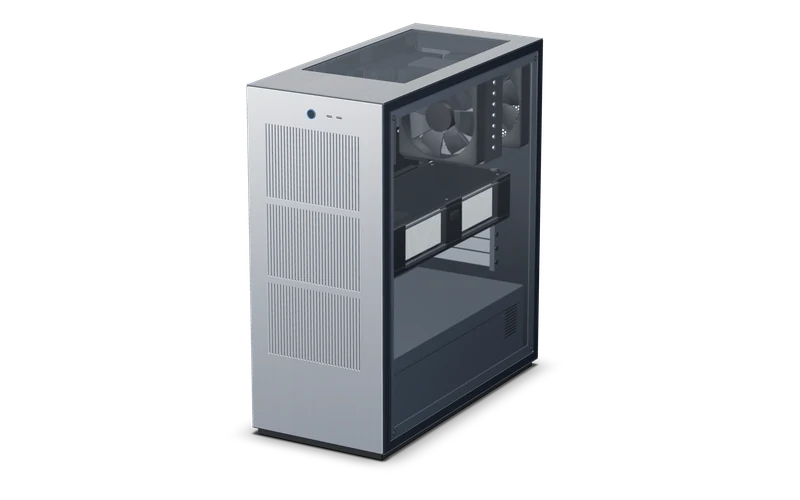
Memory-based machine candidate
1× RTX 5090
32 GB total GPU memory · 32 GB per GPU
24 GB sizing figure · 32 GB installed GPU memory. Remaining capacity is not a measured runtime reserve.
This configuration includes 64 GB system RAM. Memory capacity alone does not establish runtime compatibility, latency or throughput.
View this configurationCurrent pricing and availability are shown on the machine page.
Before deployment
Test the workload you need.
Use a runtime that handles the Harmony format and the chosen quantized artifact. Compare reasoning effort and output length alongside answer quality.
These are catalog profiles and planning figures. No B3IQ performance measurement or live capacity is claimed. Confirm the artifact, runtime, workload and machine before deployment.
Evidence available
- Upstream identity / license
- Source reviewed
- Runtime settings
- Catalog configuration
- Memory fit
- Guidance; not a measured peak
- B3IQ performance
- No published benchmark
- Installation / live capacity
- Confirm for your machine
Source and access.
- Upstream checkpoint
- openai/gpt-oss-20b ↗
- Upstream license metadata
- Apache-2.0 ↗
- Access
- No access gate reported by the upstream repository at review.
- Reviewed source revision
6cee5e81ee83917806bbde320786a8fb61efebee↗
The reviewed revision identifies the source used for this guide. It is not a claim that this revision is installed on a B3IQ machine. Review the publisher's current license and acceptable-use terms for your application.
Guide updates and corrections.
These are changes to the guide. Source-review dates and workload-test evidence are recorded separately.
- · Update
Added creator attribution and a canonical checkpoint overview. The guide now explains how the original creator differs from a runtime artifact publisher.
To report a correction, send the affected claim and a source URL to hello@b3iq.org.
Continue your evaluation.
Compare another checkpoint or explore a complementary task. Each guide explains the workload it is intended for.