Every AI company I know is a tenant. You rent GPUs by the hour, or you rent tokens by the million, and either way the meter never stops running. The machines doing your inference belong to someone else, the pricing belongs to someone else, and when the landlord changes the terms (they do), you find out in an email.
We built B3IQ because we think the next phase of AI runs on compute you actually own. I mean a physical GPU server with your name on it, not “own” in the loose crypto sense or a cloud contract with an ownership-flavored name. We buy it, rack it, wire it up, and operate it for you, and it serves your models for as long as you want to keep it.
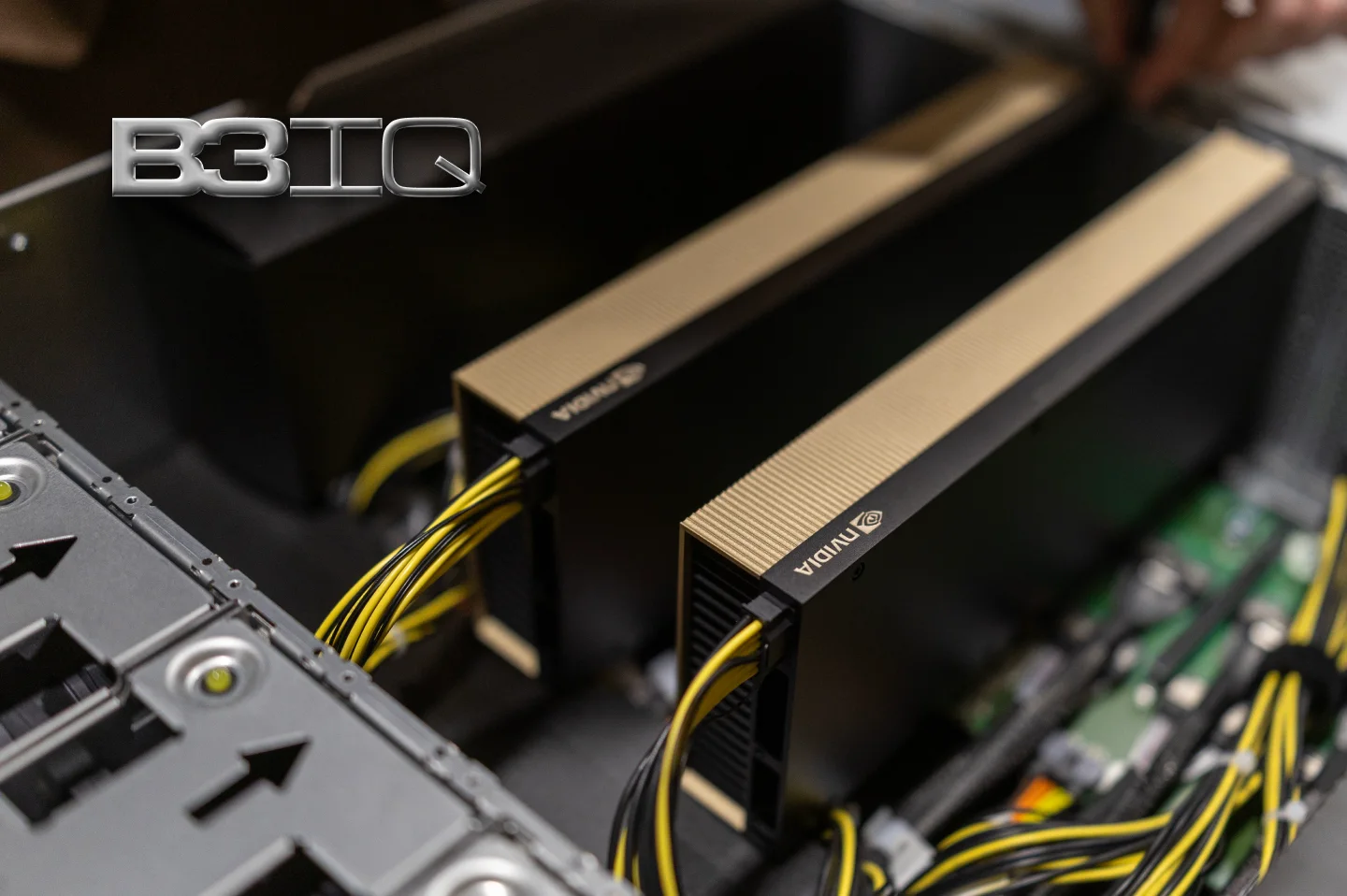
The one-stop shop part
Buying serious AI hardware yourself is miserable. You need to source the machines (lead times are real), negotiate pricing, find a datacenter with the power and cooling to take them, handle networking, install the serving stack, keep drivers and runtimes from drifting, and then babysit all of it forever. That’s a full-time infrastructure team before you’ve run a single prompt.
B3IQ collapses that into one purchase. You pick a machine, we handle the rest: procurement, hosting, setup, and serving. A few days later there’s a dedicated box in a datacenter with your models loaded, exposed to you as an OpenAI-compatible endpoint. Your existing code works by changing a base URL and a key.
You own the machine, the actual box, not a slice of a shared pool that evaporates when your reservation ends. It’s your hardware, running under your account, and if you ever want to walk away, you walk away with the asset. Our role is closer to a property manager than a hotel.
If you already have hardware, the same software runs there too. The host agent installs on Linux, and a machine can serve entirely locally without ever enrolling in the network. That’s deliberate. You shouldn’t need our cloud for your own machine to work.
What sovereign compute actually means here
“Sovereign” gets thrown around a lot, so let me be specific about what it means in B3IQ.
Your API key routes only to your machines. This is enforced in the router, not promised in a blog post. When you send a request to the gateway, the only machines eligible to serve it are the ones on your account. Your prompts don’t get load-balanced across strangers’ hardware, and strangers’ prompts don’t land on yours.
Your inference on your machine is unmetered. There’s no per-token B3IQ bill and no credit balance to top up. You bought the machine, so the tokens it produces are yours. This sounds obvious and it’s somehow the most radical part of the product, because the entire AI industry is built on the assumption that inference is a utility you rent forever.
Every machine has a cryptographic identity. It signs the heartbeats, benchmarks, and receipts it produces. When the dashboard says your node was up and served this much, the machine itself measured and signed that. We couldn’t fudge it if we wanted to.
Machines use outbound connections only. You never need to open a port, touch a firewall rule, or expose your box to the internet.
What we built
From the outside B3IQ looks like a hardware store with a concierge, but most of the company is software. Three pieces carry the weight.
The host agent is a single binary that runs on the Linux machine itself. It generates the machine’s cryptographic identity, inventories the hardware, installs models and runtimes, runs the benchmarks, and serves inference through a local OpenAI-compatible endpoint. It also serves a browser-based setup wizard, so claiming a machine and loading your first model doesn’t involve a terminal.
The control plane is what the machines talk to. It tracks enrollment and health, dispatches work, and collects the signed receipts and benchmark results everything else depends on. The hosted gateway sits on top: one API surface for all your machines, with the own-nodes-only routing rule enforced there. Your dashboard reads from that same signed data, so uptime, performance, and earnings per machine come from what the box actually reported.
Then there’s the operational glue. Machines we rack come up from a preconfigured install image and enroll themselves with a one-time code, so bringing a new rack online takes minutes of human attention instead of days of hand-configuration. And when you want to get onto your box directly, SSH runs through the same outbound tunnel the agent already uses, so the machine still never exposes a port to the internet.
None of this is exotic on its own. It is one stack, on the box from day one. The same agent that serves your models is the thing that can prove what your machine did, and that’s what makes the ownership model workable at all. For a closer look, read how B3IQ works from bare metal to sovereign AI.
The economics, without the spreadsheet
I won’t put exact numbers here, since the site has current pricing, but the shape of the argument is simple.
Renting compute is paying someone else’s margin on top of someone else’s hardware, forever. It’s the right trade when your usage is small or spiky. But inference workloads at any real scale are the opposite of spiky: they’re steady and they run every day. That’s exactly the profile where owning beats renting, same as it’s always been with houses and trucks.
Ownership converts an open-ended operating expense into a fixed asset with a known cost. Your inference bill stops scaling with your success. And the asset isn’t idle when you are: a machine you own can opt into earning, taking on outside GPU work when you’re not using it, which offsets the carrying cost. Earning is optional and per-machine; a box that’s earning is walled off from your own serving while it does, so the two never mix.
Owning hardware also means owning hardware risk. GPUs depreciate, demand shifts, and a machine is less liquid than a cloud account you can close tomorrow. If your workload might be gone in three months, keep renting. B3IQ is for people who know AI is in their cost structure permanently and would rather hold the asset than pay the meter.
Why we built it
B3 has been building at the intersection of AI and open infrastructure for years, and the pattern we kept hitting was the same: everything interesting downstream of AI depends on compute, and compute is concentrated in the hands of a few landlords. Prices move, and capacity gets allocated to whoever’s biggest. The fix is more owners, not another reseller.
The reason we could actually build that fix is a little unusual. Last year B3 acquired majority stake in Andromeda Insights, a gaming PC builder out of Oregon that had grown more than 1,700% since 2021 by doing one thing extremely well: high-end machines, built to order, burned in, and shipped to people who scrutinize every component. It was B3’s first step into hardware, and it came with benefits you can’t spin up on a whiteboard: a working warehouse with the power, cooling, and space to run serious machines; a team that assembles and stress-tests top-tier silicon every day; and the supplier relationships to actually get premium NVIDIA hardware in a market where it’s gated and back-ordered for everyone else.
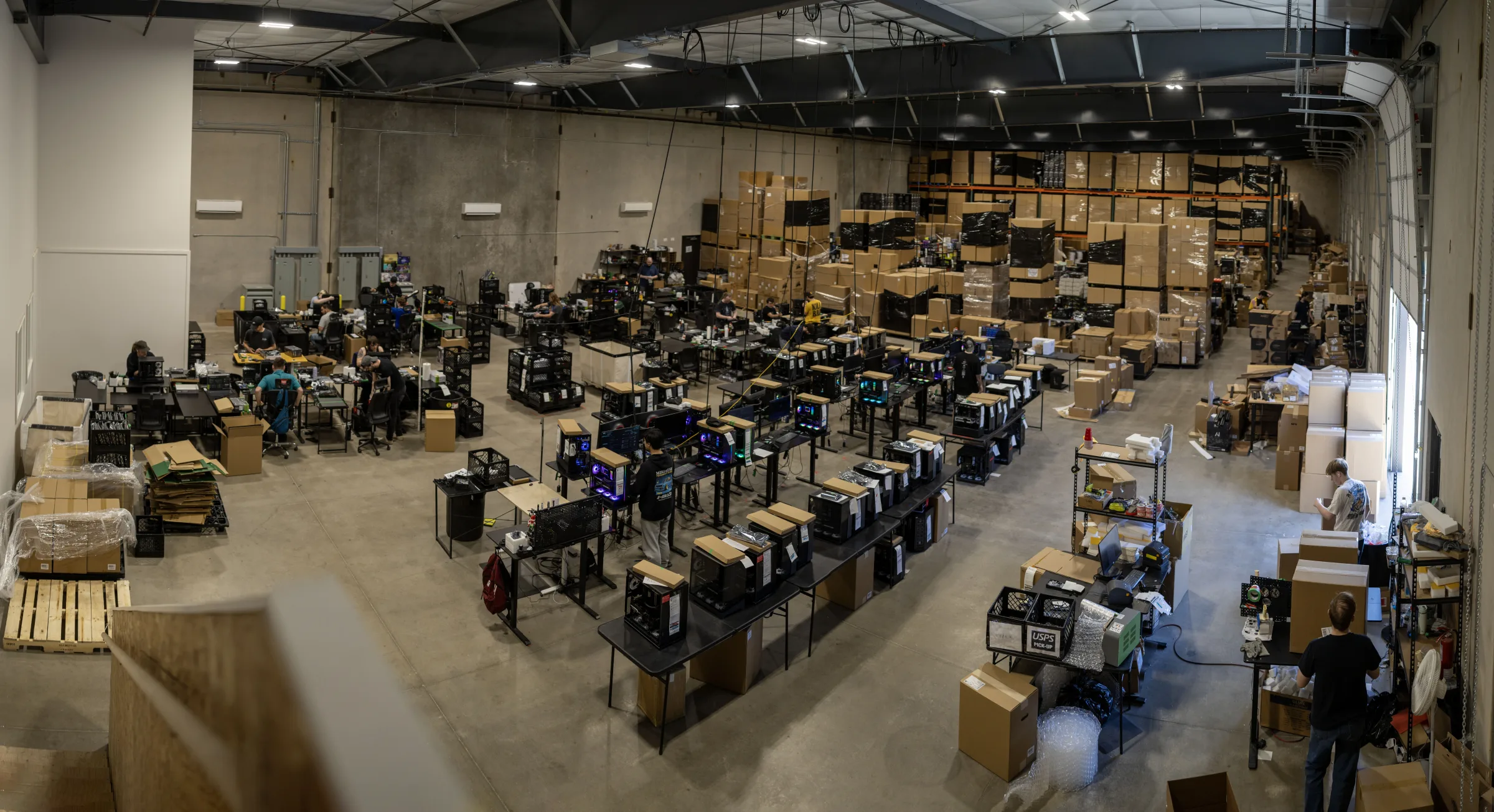
Building a great gaming rig and building a great inference node come down to the same work: the same procurement, the same assembly and burn-in discipline, the same thermal and power problems to solve. So with the Andromeda team, we did exactly that: sourced the devices, stood up the rigs, and built up the stack ourselves until we had private inference running on hardware we controlled end to end. When we weren’t using compute for B3OS, we rented idle capacity on B3IQ’s off-take marketplace.
We built it for our own AI needs first. Then partners started asking us to run it for them too, which is roughly when it stopped being an internal tool.
What we want out of B3IQ is a network where the machines are owned by the people using them, and where the claims about those machines are verifiable down to signed receipts. More independently owned capacity coming online, one machine at a time. How far that gets, we will see.
The launch is live at b3iq.org. Go look at the machines. And if you own one and build something on it, show me.